Step by step guide to moving household goods to France from the UK

Moving household goods to France from the UK sounds simple on paper. Pack the boxes, load the van, cross the Channel, job done. In reality, there are a lot more moving parts: timing, inventory, packing, transport, customs paperwork, access at both ends, and the small details that can turn a calm move into a messy one. This step by step guide to moving household goods to France from the UK is designed to make the process feel manageable, whether you are moving a whole house, part of a household, or just the bulky items that are awkward to ship on your own.
Truth be told, most problems happen before the vehicle even leaves the UK. A missing document, badly packed box, or last-minute change to delivery access can cost you time and money. So below, you will find a practical, human guide that walks through the move in the right order, with clear decisions at each stage. If you want help comparing removal options, it can also be useful to look at removals, home moves, or a more flexible man and van approach depending on the size of your load.
Expert summary: the best cross-Channel moves are usually the ones planned early, packed with intent, documented properly, and booked with enough margin for ferry delays, building access quirks, and that one box everyone forgets until the last minute.
Why Step by step guide to moving household goods to France from the UK Matters
A France move is not just a longer version of a local house move. You are dealing with an international journey, different access conditions, and the possibility that your belongings will be handled more than once during transit. That is exactly why a step by step approach helps. It turns a big, vague task into smaller decisions you can actually control.
For households, the biggest benefit is clarity. You know what is going, what is staying, what needs special packing, and what needs to be ready before collection day. That alone reduces stress. It also helps you avoid paying to transport things you no longer need. Nobody wants to send a scratched bedside table across Europe just because it was easier than thinking about it. We have all been there, to be fair.
There is also a practical side. Once your items are organised properly, quotes become more accurate, loading is faster, and arrival in France is smoother. If you are comparing professional help, services like house removals or house movers can make sense for a full household, while moving van or removal van options can suit smaller loads.
A well-planned move to France is rarely the cheapest move on paper, but it is often the cheapest move overall because it avoids re-delivery fees, wasted packing, and avoidable delays.
How Step by step guide to moving household goods to France from the UK Works
The process usually follows a fairly predictable pattern. First, you decide what you are moving. Next, you prepare the inventory and paperwork. Then you pack, load, transport, unload, and settle in. Simple enough, except each stage has small choices that matter.
In a typical household move, your items are collected from the UK address, secured for transport, and moved by road and ferry or channel tunnel route into France. Depending on the size of the job, the move may be direct or shared with other consignments. Shared loads can be cost-effective, but they often need more flexibility on delivery dates. Direct moves are usually easier for timing, especially if you have furniture, fragile items, or a tight handover window.
That is where the right service matters. A larger move might suit a dedicated removal service, while a lighter household load may fit a man with van removal or a man with van arrangement. If you need help with the labour around packing as well as transport, packing and unpacking services can take a lot of pressure off the day itself.
One thing people often underestimate is access. A narrow French village street, a steep driveway, or a third-floor apartment with no lift can change the whole logistics plan. It is not dramatic. It is just real life.
Key Benefits and Practical Advantages
Using a structured process for your France move gives you more than just a tidy checklist. It improves the quality of the move from start to finish.
- Better cost control: you are less likely to pay for unnecessary items, rushed packing, or extra trips.
- Less breakage: planning fragile items properly reduces damage during loading and long-distance transport.
- Clearer quotes: when your inventory is accurate, removal companies can price more fairly.
- Less stress on moving day: no last-minute hunting for passports, keys, or cables.
- Smoother unloading: labels and room-by-room packing help you settle faster.
- Better decision-making: you can choose between full-service removals, van hire, or a smaller load service with more confidence.
There is another advantage people do not always mention. A clean, step-by-step move makes it much easier to involve family members, landlords, or property agents. Everyone understands the plan. Everyone knows what happens next. Fewer surprises, fewer phone calls, fewer "where did we put the kettle?" moments.
If you are in the comparison stage, browsing removal company and removal services information can help you decide how much support you actually need.
Who This Is For and When It Makes Sense
This guide is for anyone moving household goods from the UK to France, but it is especially useful if you fall into one of these groups:
- Families relocating permanently and taking most of their possessions
- Couples moving to France for work, retirement, or a lifestyle change
- Second-home owners moving seasonal furniture or personal belongings
- People returning to France after time in the UK
- Renters moving smaller loads and needing flexible transport
- Anyone who wants to reduce the cost of replacing furniture from scratch
It also makes sense when your goods are personal, sentimental, or simply hard to replace. A dining table from your parents. Children's beds that already fit. A decent office chair that you do not want to buy again. Those things add up quickly.
On the other hand, if you are moving only a few bags and some boxes, a full-scale removal truck may be more than you need. In that case, a lighter option such as movers or man and van removals may be more practical. If you are unsure, that is normal. Most people are unsure at first.
Step-by-Step Guidance
1. Decide exactly what is going to France
Start with the honest version, not the optimistic one. Walk through the property room by room and separate items into four groups: take, sell, donate, recycle. This is the point where many people discover they have been storing an extra lamp, three spare rugs, and enough cables to wire a small airport.
Be selective. Large furniture is expensive to move if it is not worth keeping. If an item will need replacing within a year anyway, it may be smarter to leave it behind. For bulky pieces that are not travelling, a service like furniture pick up can help you clear the rest of the property without turning the final week into a chaos buffet.
2. Measure, photograph, and inventory your items
Create a simple inventory with room names, item descriptions, and approximate dimensions. Photos are useful for insurance, planning, and your own memory when you are standing in a French house asking, "where did the big mirror go?"
This step helps the transport team estimate space and loading order. It also helps you identify problem items in advance, such as oversized wardrobes, awkward sofas, or fragile kitchenware. Make a note of anything valuable, delicate, or oddly shaped.
3. Check access at both addresses
Access can make or break the schedule. Think about parking, stairs, lifts, width of doors, long carries, and turning space for the vehicle. If you are moving into a rural French property, check whether a large vehicle can actually reach the entrance. Narrow lanes and low branches are not rare. They are part of the deal.
Take a minute to confirm whether any permits, building rules, or neighbour considerations apply at either end. A small planning call now can save a much bigger headache later.
4. Get an accurate quote and choose the right level of service
Once you know the volume and access conditions, request a quote that reflects the actual job. The cheapest option is not always the best, especially if it leaves out handling, loading, transit insurance, or delivery support.
You may find that a dedicated removal company is best for a full household, while a smaller move could be covered by removal van transport. Some customers prefer a simple man with a van setup because it feels more flexible, especially for partial loads or a staged move.
5. Prepare documents and moving details
International moves can involve paperwork for customs, identity, and transport records. The exact requirements can vary depending on your circumstances, what you are moving, and whether the move is temporary or permanent. It is always sensible to check the current requirements before you travel.
Keep the essentials together: passport, housing documents, inventory, contact details, keys, payment references, and any instructions for the delivery address. Put them in one folder. Not a nice idea. A real folder. Old-fashioned works.
6. Pack room by room and label clearly
Room-by-room packing is slower at the start and faster at the end. It helps your items arrive in the right place and makes unpacking much less painful. Use strong boxes, proper tape, and enough filler material for breakables. Do not overload boxes with books unless you enjoy carrying bricks disguised as cardboard.
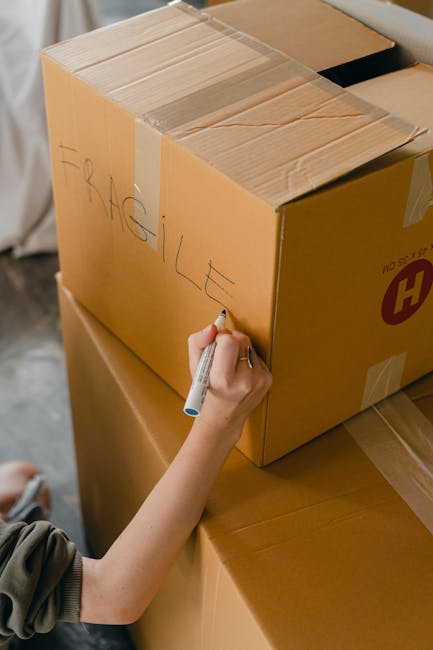
Label each box with the room, contents, and whether it is fragile. A simple system is enough: "Kitchen - everyday crockery - fragile" is far better than "miscellaneous." If you want help with the work itself, packing and unpacking services can be a practical add-on.
7. Protect furniture and disassemble where sensible
Take apart beds, tables, and shelving only when it genuinely helps the move. Keep screws, bolts, and fittings in labelled bags taped to the item or stored in one clearly marked box. It sounds obvious, but this is one of those "I'll remember that" moments that never survives the first coffee break.
Use covers and protective wrap for surfaces that scratch easily. Sofas, glass tops, and wardrobes benefit from extra care. The aim is not perfection. The aim is to arrive without unnecessary dents.
8. Load with weight and fragility in mind
Heavy items should go in first, with fragile boxes placed where they will not be crushed. Good loading is half organisation and half common sense. A skilled team will usually plan the load so weight is balanced and items are kept stable during transit.
If you are moving a smaller load, a moving truck can be suitable when you have more bulky furniture than boxes. For lighter loads, smaller vehicle options may be easier on cost and access.
9. Track transit timing and delivery expectations
Plan for the fact that cross-Channel travel is not always perfectly predictable. Weather, ferry timings, traffic, and access delays can all affect arrival. Build in breathing space where you can. It makes the whole experience calmer, especially if you are also waiting for keys or a handover at the new property.
If you have an exact move-in window, make that clear early. If your dates are flexible, even better. Flexibility is often worth money, and sometimes worth a lot of sanity.
10. Unload, check, and settle methodically
When the goods arrive, check items against your inventory and direct boxes to the correct rooms. Start with essentials: bedding, kitchen basics, toiletries, chargers, and a few tools. The first evening in a new home always feels better when you can find a mug without opening 14 boxes.
Inspect furniture for damage as it comes off the vehicle, and note any concerns promptly. Most moves go fine, but it is still worth paying attention. A quick check now is easier than trying to reconstruct what happened two days later.
Expert Tips for Better Results
Small decisions make a surprising difference. Here are the things experienced movers tend to do well.
- Declutter first: move only what you genuinely want in France.
- Keep one essentials bag: documents, chargers, medication, keys, and a change of clothes.
- Use one master inventory: it keeps the whole job under control.
- Photograph valuable items: especially before wrapping and loading.
- Measure doorways and stairs: a sofa that fits in the UK may not fit in a French hallway.
- Set a buffer day: it reduces pressure if travel or access slips.
One practical tip that people rarely mention: pack a small cleaning kit separately. Cloths, bin bags, spray, paper towels, and basic tools can save your bacon on both ends. Nothing glamorous, but very useful at 9pm when a shelf needs tightening.
And if you are comparing service styles, do not overlook the middle ground. A full removal package is not the only answer. Sometimes a partial load with a man and van removals service is exactly right for the volume you have. Not too much, not too little.
Common Mistakes to Avoid
A lot of cross-border moving mistakes are basic, but they are basic because people are busy and distracted. That is fair enough. Still, they can be costly.
- Leaving planning too late: this makes quotes less accurate and limits your options.
- Overpacking boxes: too heavy to carry, too risky to stack.
- Not measuring large items: furniture fit problems are avoidable.
- Ignoring access issues: especially in older buildings or rural French locations.
- Mixing essentials with general boxes: this creates panic on arrival.
- Skipping insurance questions: do not assume everything is automatically covered.
- Forgetting disposal costs: items you leave behind still need to be handled properly.
Another mistake is assuming every move should be done the same way. A couple moving into an apartment in Lyon will need a different plan from a family taking a full house to Normandy. Same country, very different logistics.
Also, a slightly cheeky one: do not label a box "important stuff" and expect future-you to remember what that means. Future-you will not. Future-you is tired.
Tools, Resources and Recommendations
You do not need a complicated setup to move well. A few simple tools can improve the process a lot.
- Inventory spreadsheet or notebook: for rooms, contents, and box numbers.
- Measuring tape: for furniture dimensions and access checks.
- Marker pens and labels: clear, bold, easy to read.
- Heavy-duty tape and wrap: for protection and box sealing.
- Basic toolkit: screwdrivers, Allen keys, small spanner, and scissors.
- Documents folder: passports, quotes, inventories, and key notes in one place.
When choosing support, look at the overall fit rather than just the headline price. A reliable removal services option may be better value than a cheaper quote that leaves you handling the awkward bits alone. For larger homes, house removalists can be a practical choice if you want a more hands-on, experienced team.
If you are still deciding how much help you need, browsing removals near me can be a sensible starting point for understanding the available service mix.
Law, Compliance, Standards, or Best Practice
Cross-border household moves are not something you want to improvise. While the exact requirements can vary by route, timing, and the type of items being moved, there are a few broad best practices that apply in almost every case.
First, make sure your belongings are described accurately. Your inventory should reflect what is actually being moved, not what you hope will fit in later. Second, keep records of ownership for valuable items where sensible. Third, check any customs or declaration requirements that may apply to your move at the time you travel, because those details can change.
From a safety perspective, a professional mover should handle loading, securing, and transit with proper care. It is worth asking about their approach to item protection, vehicle loading, and insurance. For peace of mind, you can also review insurance and safety, along with health and safety policy information and terms and conditions before confirming a booking.
If you are trying to clear items responsibly before the move, the company's recycling and sustainability approach may also matter to you. It is a good sign when a move plan considers not just transport, but what happens to the things you do not take.
Options, Methods, or Comparison Table
There is no single "best" way to move household goods to France. The right choice depends on volume, budget, flexibility, and how much work you want to do yourself.
| Option | Best for | Strengths | Trade-offs |
|---|---|---|---|
| Full house removals | Large households, full relocations | Most convenient, better for furniture and mixed loads | Usually the highest-cost option |
| Man and van | Smaller loads, flexible moves | Simple, adaptable, often good for partial moves | Less suitable for very large homes |
| Moving van / removal van | Mid-size loads and practical transport | Good balance of cost and capacity | May require more planning for loading and timing |
| Shared load / grouped transport | Budget-conscious movers with flexible dates | Can reduce costs | Delivery timing may be less exact |
If you are moving a business as well as a household, it is worth noting that different services may apply. For example, commercial moves or office removals have a different logistics profile from a standard home relocation. Not every move fits the same box, literally or figuratively.
Case Study or Real-World Example
Imagine a couple leaving Surrey for a house outside Bordeaux. They are taking a sofa, two beds, a dining table, around 40 boxes, and a few personal items that matter more than their resale value. They first sort the move into keep, sell, and recycle. A chest of drawers that barely survived the last move? Left behind. A family table with sentimental value? Taken.
They measure the sofa and the French front door, check the driveway width, and realise the property sits on a lane with limited turning space. That one check changes the plan. Instead of booking the biggest vehicle available, they choose a more suitable load size and make sure delivery timing is confirmed in advance. They also pack an essentials box for the first night, because nobody enjoys digging for toothbrushes after a long drive.
The move itself is not glamorous. There is tape everywhere. Someone loses the scissors, then finds them in the kitchen drawer where they should have been all along. But because the inventory is clear and the loading plan is sensible, the arrival in France is calm. Boxes go to the right rooms. Furniture is checked off. The couple can breathe. That, really, is what a good move feels like.
For a move like that, the right blend of house movers, transport planning, and maybe even some packing and unpacking services support can make the difference between controlled and chaotic.
Practical Checklist
Use this checklist in the final weeks before moving day.
- Confirm what household goods are definitely going to France
- Measure large furniture and check access at both properties
- Create a room-by-room inventory
- Request quotes based on the actual volume and access conditions
- Ask about insurance, safety, and delivery arrangements
- Gather passports, documents, and move details in one folder
- Sort, donate, recycle, or arrange collection for unwanted items
- Pack fragile items carefully with clear labels
- Keep an essentials bag with the items you need immediately
- Disassemble furniture only where it makes transport easier
- Take photos of valuable items before loading
- Confirm key handover, parking, and arrival timings
- Check everything off as it is unloaded
Small checklist. Big difference. Simple as that.
Get a free quote today and see how much you can save.
Conclusion
A successful move from the UK to France is usually not about luck. It is about sequence. Decide what you are taking, measure it, document it, pack it properly, choose the right transport, and leave enough time for the journey to do what journeys sometimes do. That may sound obvious, but it is exactly the obvious things that keep a move steady.
If you treat the process as a series of small, sensible steps, it becomes far less intimidating. You do not need to solve the whole move in one afternoon. You just need the next right task, then the one after that. And before long, the boxes are in France, the kettle is unpacked, and the new place starts to feel like home. That is the good part.
Take your time, plan well, and give yourself a bit of grace along the way. Moving household goods to France from the UK is a big job, yes, but it is absolutely doable when you approach it with a calm head and a clear order of play.
Frequently Asked Questions
How far in advance should I plan a move to France from the UK?
The earlier the better. A few weeks may work for a small, flexible move, but a full household relocation usually benefits from more lead time. That gives you time to sort belongings, confirm access, and choose the right transport option without rushing.
What is the easiest way to move household goods to France?
The easiest option is usually the one that matches your load size and timing. For a full home, a removal company is often the least stressful choice. For a smaller move, a van-based service may be more practical and more cost-effective.
Do I need to make an inventory of everything?
Yes, at least a basic one. A clear inventory helps with planning, quoting, loading, and checking items on arrival. It also makes it easier to spot if something has been left behind or needs extra protection.
Can I take furniture and personal items at the same time?
Yes. In fact, that is very common. Most household moves include a mix of furniture, boxes, clothes, kitchenware, and sentimental items. The main thing is to pack them in a way that suits the journey and the unloading process.
Is a man and van suitable for moving to France?
It can be, especially for smaller loads or partial household moves. A man and van service may suit people who do not need a full truck and want a more flexible approach.
How do I know whether I need a removal van or a full removal truck?
Start with the volume of belongings, not the vehicle size. If you are taking most of a home, a larger vehicle is usually more appropriate. If you are moving a few rooms' worth of goods, a moving van or removal van may be enough.
What should I pack separately for the journey itself?
Keep documents, medication, chargers, keys, a change of clothes, and basic toiletries with you. It also helps to have snacks, water, and a small toolkit if you are going to need to reassemble furniture quickly.
What if my French property has difficult access?
Tell the mover early. Narrow streets, steep driveways, parking restrictions, and upper-floor access can affect the size of vehicle and the unloading plan. The more accurate the access details, the smoother the move tends to be.
How can I reduce the cost of moving household goods to France?
Declutter before you move, compare services carefully, and be clear about the volume and access. Flexible dates can also help, especially if you are open to shared-load transport. A smaller, cleaner load is often cheaper and easier all round.
Should I use packing services or do it myself?
If you have time, confidence, and a manageable load, self-packing can work well. If you have fragile items, limited time, or a larger household, professional packing support can reduce risk and save a lot of effort. It depends on the move, honestly.
What happens if some items are not going with me?
Separate them early so they do not get mixed back in. Items you are leaving behind can be sold, donated, recycled, or collected depending on what they are. The key is not to leave that decision until the final night. That way lies confusion.
Can I move part of my household first and the rest later?
Yes, staged moves are common. Some people move essentials and furniture first, then bring the remaining items later. That can make sense if your timing is uncertain or if you are still settling the new property.
Where should I start if I want help with the move?
Start by identifying the size of the load, the access conditions, and how much help you want with packing and transport. From there, you can compare options such as removal services, house removals, or a smaller van-based solution that suits your circumstances.